
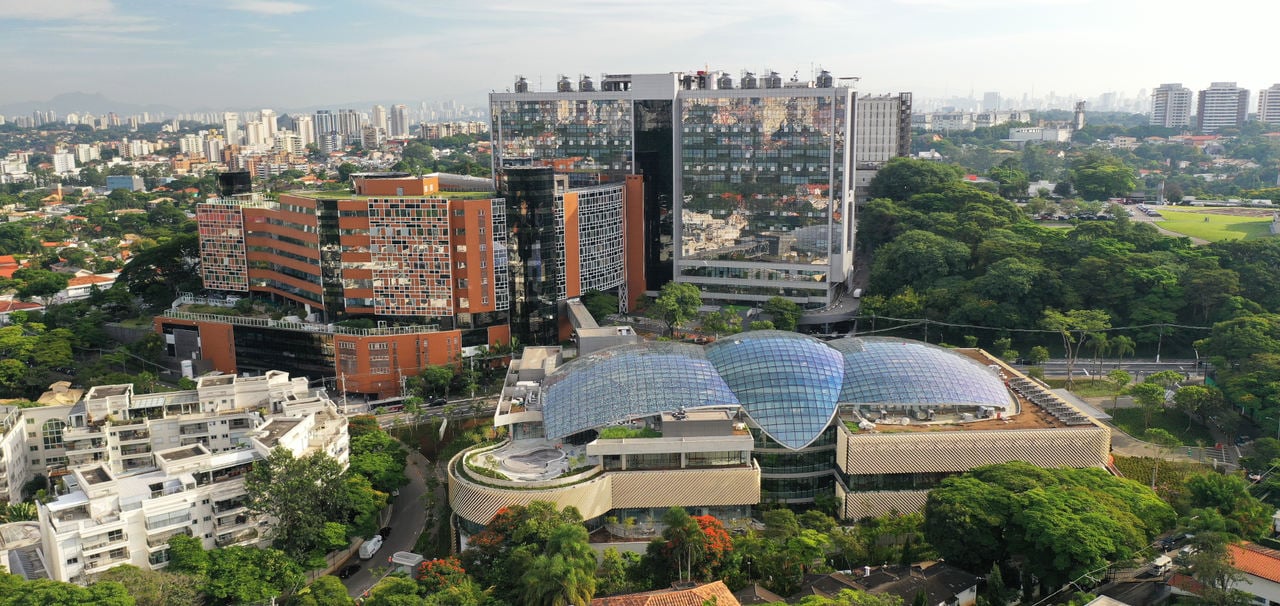
If you are considering plastic surgery in Brazil, the hospital matters as much as the surgeon. This page explains what it means to have surgery with a plastic surgeon on the staff of Albert Einstein — and how to verify every claim on it from abroad.
Who is Dr. Lucas Carneiro
Dr. Lucas Carneiro is a Brazilian plastic surgeon licensed under CRM-SP 136.298, with specialist registration RQE 50.532 — the Brazilian equivalent of board certification. He holds the Specialist Title in Plastic Surgery granted by the SBCP and recognised by the AMB and MEC, trained at the ABC Medical School and completed a fellowship at the DKFZ in Heidelberg, Germany's largest specialised medical centre.
Brazilian credentials can be confusing from abroad, so here is how they map. The CRM is the state medical licence, issued by the Regional Council of Medicine of São Paulo. The RQE (Registro de Qualificação de Especialista) is a separate registration granted only to physicians who hold a recognised specialist title — it is the closest equivalent to board certification in the United States. The SBCP is the only plastic surgery society recognised by the Brazilian Federal Council of Medicine; its Specialist Member title is what generates the RQE.
Dr. Lucas trained in plastic surgery at the ABC Medical School — a three-year full-time residency with more than 7,000 consultations and more than 1,000 surgeries — and obtained his Specialist Title in Plastic Surgery granted by the Brazilian Society of Plastic Surgery (SBCP) and recognised by the Brazilian Medical Association (AMB) and the Ministry of Education (MEC) in 2015 — which makes him a board-certified plastic surgeon in the Brazilian system. In 2006 he completed a fellowship at the DKFZ (German Cancer Research Center) in Heidelberg, Germany's largest institution for medical and technological research, where he deepened his work on surgical anatomy, operative risk and long-term outcomes. It was a period of daily contact with leading figures in medicine, among them Harald zur Hausen, who two years later received the 2008 Nobel Prize in Medicine for demonstrating the role of HPV, the human papillomavirus, in cervical cancer. He created the Plastic Surgery for Patients Method (Método Plástica para Pacientes), a structured patient journey from the first consultation to 12 months of follow-up, now taught to patients and surgeons in Brazil.
More than 11 years on the clinical staff of Albert Einstein
Being on the clinical staff of Hospital Albert Einstein for over 11 years means Dr. Lucas Carneiro holds permanent surgical privileges at the hospital, passed its credentialing review of qualifications and professional conduct, and is periodically re-evaluated under Einstein's quality and patient-safety programmes.
Hospital privileges in Brazil work much as they do in the United States or the United Kingdom: the hospital verifies the diploma, residency, specialist title, medical licence and professional record before granting them, and reviews performance and safety indicators on an ongoing basis. Dr. Lucas joined the Albert Einstein staff in early 2015 and practises at the Morumbi, Perdizes and Pinheiros units. For two years he was the reference physician of the hospital's Programa Cuidar, an internal programme of plastic surgery care for Einstein's own staff, in which he performed high-complexity reconstructive plastic surgery at Albert Einstein Morumbi.
For an international patient, eleven years of continuous privileges at the same accredited hospital is a verifiable signal — not a testimonial. It also means the surgeon works with an anaesthesia team, operating-room routine and nursing protocols he has shared for over a decade. Surgery is a team activity, and a team that has worked together for years is safer than one assembled for the day.
What an accredited hospital means for your safety
Hospital Israelita Albert Einstein was the first healthcare institution outside the United States accredited by the Joint Commission International, in 1999, and currently holds more than 25 international certifications, including Magnet designation for nursing excellence. For a surgical patient, that translates into audited protocols for identification, infection control, anaesthesia and post-operative care.
JCI accreditation is the same standard used by leading hospitals in the United States, Europe and the Middle East. It is not a marketing badge: it is a set of checklists, audits and indicators that every surgery has to comply with — surgical safety checklist before the incision, patient identification and site confirmation, thrombosis prophylaxis, temperature control, and full documentation of each step. These do not depend on any single surgeon remembering them; they are institutional.
Newsweek's World's Best Hospitals 2026 ranked Albert Einstein 16th in the world and, for the seventh consecutive year, the best hospital in Latin America. We cite the ranking as an independent, external measure of the infrastructure described on this page — nothing more.
Why the hospital matters as much as the surgeon
The structure of Hospital Albert Einstein changes the safety of a plastic surgery because it provides, in the same building, dedicated anaesthesiology, an intensive care unit, a blood bank, a laboratory and specialists on call around the clock. Most surgeries never need any of it — but it is what answers safely when the unexpected happens.
A Deep Plane Facelift or a Mommy Makeover is a medium-to-major procedure under general anaesthesia, planned in detail for each patient. Under normal conditions it proceeds without incident. The question a patient should ask is not "what happens if everything goes well", but "what happens if something does not". In a stand-alone clinic the answer is an ambulance. At Albert Einstein the answer is an intensivist, a cardiologist or a haematologist who arrives within minutes.
Brazil also regulates aesthetic surgery closely: medical advertising, surgical planning and hospital infrastructure are governed by the Federal and Regional Councils of Medicine, which require institutions to provide compatible anaesthesia support and intensive-care backup. Dr. Lucas plans every procedure within those rules; when a plan is extensive, it is divided into two surgical stages, which is discussed in the consultation.
Procedures Dr. Lucas performs at Albert Einstein
At Hospital Albert Einstein, Dr. Lucas Carneiro performs the Deep Plane Facelift and neck lift, lower and combined blepharoplasty, Mommy Makeover, abdominoplasty and lipoabdominoplasty, liposuction, breast surgery (augmentation, mastopexy and reduction) and otoplasty. Isolated upper blepharoplasty, under pure local anaesthesia, is performed at the clinic.
The rule is simple: every medium or major procedure, and every procedure under general anaesthesia, takes place in hospital. At Einstein that includes the deeper facial surgeries — the Deep Plane Facelift with or without neck lift, and lower or four-eyelid blepharoplasty — and the body procedures: Mommy Makeover, abdominoplasty with diastasis repair, liposuction, fat grafting and breast surgery.
Each procedure has its own page in English with indications, technique, recovery and frequently asked questions: Deep Plane Facelift, Blepharoplasty, Mommy Makeover and Abdominoplasty.
How it works for international patients: from first contact to follow-up
International patients start with a video consultation, receive a written surgical plan and a list of pre-operative tests to complete at home, are seen in person at the São Paulo clinic on arrival, have surgery at Albert Einstein with an overnight stay when indicated, and are followed in person until cleared to fly, then remotely from home.
The first step is a remote consultation, in English, with Dr. Lucas. Based on photographs and medical history he indicates whether there is a surgical indication, which technique, and whether the plan fits in a single stage. Pre-operative tests — full cardiological assessment and laboratory work, required of every patient regardless of age — can be done in your home country and reviewed before travel. Aspirin is stopped 7 to 10 days before surgery; excess garlic and ginkgo biloba, 20 to 30 days before; smokers must stop 4 weeks before and 4 weeks after.
On arrival in São Paulo you are seen in person at the clinic (Rua Verbo Divino, 451) before surgery. Surgery takes place at Albert Einstein; facelift, Mommy Makeover and abdominoplasty usually involve one night in hospital. Follow-up visits are at 7 days and at 14 to 21 days, and for flights longer than 5 hours after a facelift the recommendation is to remain in Brazil for 14 to 21 days. After you return home, follow-up continues by video and message, with the 2-month review done remotely, until the final result settles between 6 and 12 months depending on the procedure.
The International Patients page covers logistics — accommodation near the hospital, companions, insurance and communication — in detail.
Other hospitals where Dr. Lucas operates
Besides Hospital Albert Einstein, Dr. Lucas Carneiro is on the clinical staff of Hospital Sírio-Libanês and also operates at Hospital Alemão Oswaldo Cruz, Hospital São Luiz and Hospital Blanc, all in São Paulo. Each is an accredited hospital with a multidisciplinary team and intensive-care backup; he never operates outside a full hospital setting.
The choice between hospitals depends on operating-room availability and patient preference. The criterion never changes. For international patients, Albert Einstein is usually the recommended option because of its infrastructure for foreign patients and its location in Morumbi, with hotels within a short drive.
Frequently asked questions about plastic surgery at Albert Einstein
Is Dr. Lucas Carneiro a board-certified plastic surgeon?
Yes, in the Brazilian sense of the term: he holds the Specialist Title in Plastic Surgery granted by the Brazilian Society of Plastic Surgery (SBCP) — the only plastic surgery society recognised by the Federal Council of Medicine — and recognised by the Brazilian Medical Association (AMB) and the Ministry of Education (MEC), with the corresponding specialist registration RQE 50.532. Both can be verified online on the Federal Council of Medicine portal and on the SBCP member directory.
Does Dr. Lucas operate at Hospital Albert Einstein?
Yes. He has been a member of the clinical staff of Hospital Israelita Albert Einstein for more than 11 years and performs his medium and major procedures there — Deep Plane Facelift, lower and combined blepharoplasty, Mommy Makeover, abdominoplasty, liposuction, breast surgery and otoplasty.
Is Hospital Albert Einstein JCI-accredited?
Yes. Albert Einstein was the first healthcare institution outside the United States to be accredited by the Joint Commission International, in 1999, and holds more than 25 international certifications, including Magnet designation for nursing. Newsweek's World's Best Hospitals 2026 ranked it 16th worldwide and first in Latin America for the seventh year running.
How do I verify a Brazilian plastic surgeon from abroad?
Three checks: the CRM number on the Federal Council of Medicine portal (medical licence), the RQE number on the same portal (specialist registration), and the surgeon's name in the SBCP member directory. A surgeon who is listed in all three is a titled plastic surgeon. Dr. Lucas Carneiro's numbers are CRM-SP 136.298 and RQE 50.532.
Is plastic surgery in Brazil safe?
It is when performed by a titled plastic surgeon in an accredited hospital. Brazil has strict rules: medical advertising and surgical practice are regulated by the Federal Council of Medicine, and hospitals are required to provide anaesthesia support and intensive-care backup. The relevant question is not the country, but the surgeon's credentials and the hospital.
How long do I need to stay in Brazil after surgery?
It depends on the procedure and on your flight. After a facelift, for flights longer than 5 hours, the recommendation is 14 to 21 days, which covers the 7-day and 14-to-21-day follow-up visits. Body procedures follow similar timing; Dr. Lucas confirms the recommended stay in the surgical plan, and follow-up continues remotely after you return home.
Can the first consultation be done online?
Yes. International patients begin with a video consultation in English. Based on photographs and history, Dr. Lucas indicates whether surgery is appropriate, which technique, and what tests to complete at home. The in-person consultation happens on arrival in São Paulo, before surgery — no procedure is scheduled without it.
Will I stay overnight in the hospital?
For facelift, Mommy Makeover and abdominoplasty, one night at Albert Einstein in most cases. Isolated lower blepharoplasty is usually a same-day discharge. Isolated upper blepharoplasty, under pure local anaesthesia, is performed at the clinic without admission.
Does the team speak English?
Yes. Dr. Lucas consults in Portuguese, English and Spanish, and his international patient coordinator also speaks English, Portuguese and Spanish. Hospital Albert Einstein has structured services for international patients.
Does international health insurance cover the surgery?
Aesthetic surgery is not covered by Brazilian health plans and rarely by international insurance; it is planned as a private investment. What some policies cover is emergency hospital care in case of complication, which should be confirmed with your insurer before travelling. The clinic provides the documentation your insurer may request.
Booking a consultation
To book a consultation with Dr. Lucas Carneiro, contact Dr. Lucas's team by WhatsApp at +55 11 97777-6611 or through the website form (Online Consultation). International patients begin with a video consultation in English; the in-person consultation takes place at the São Paulo clinic on arrival, before surgery at Hospital Albert Einstein.
Consultations are private; Brazilian health plans do not cover aesthetic surgery, and international insurance rarely does. [OPTIONAL — permitted under Brazilian medical advertising rules: consultation fee and payment methods, including international cards or transfer.] The clinic operates Monday to Friday, 9 am to 6 pm, São Paulo time (UTC−3).
If you are choosing where and with whom to have plastic surgery in Brazil, ask two questions — about the surgeon and about the hospital. This page is the answer to both.